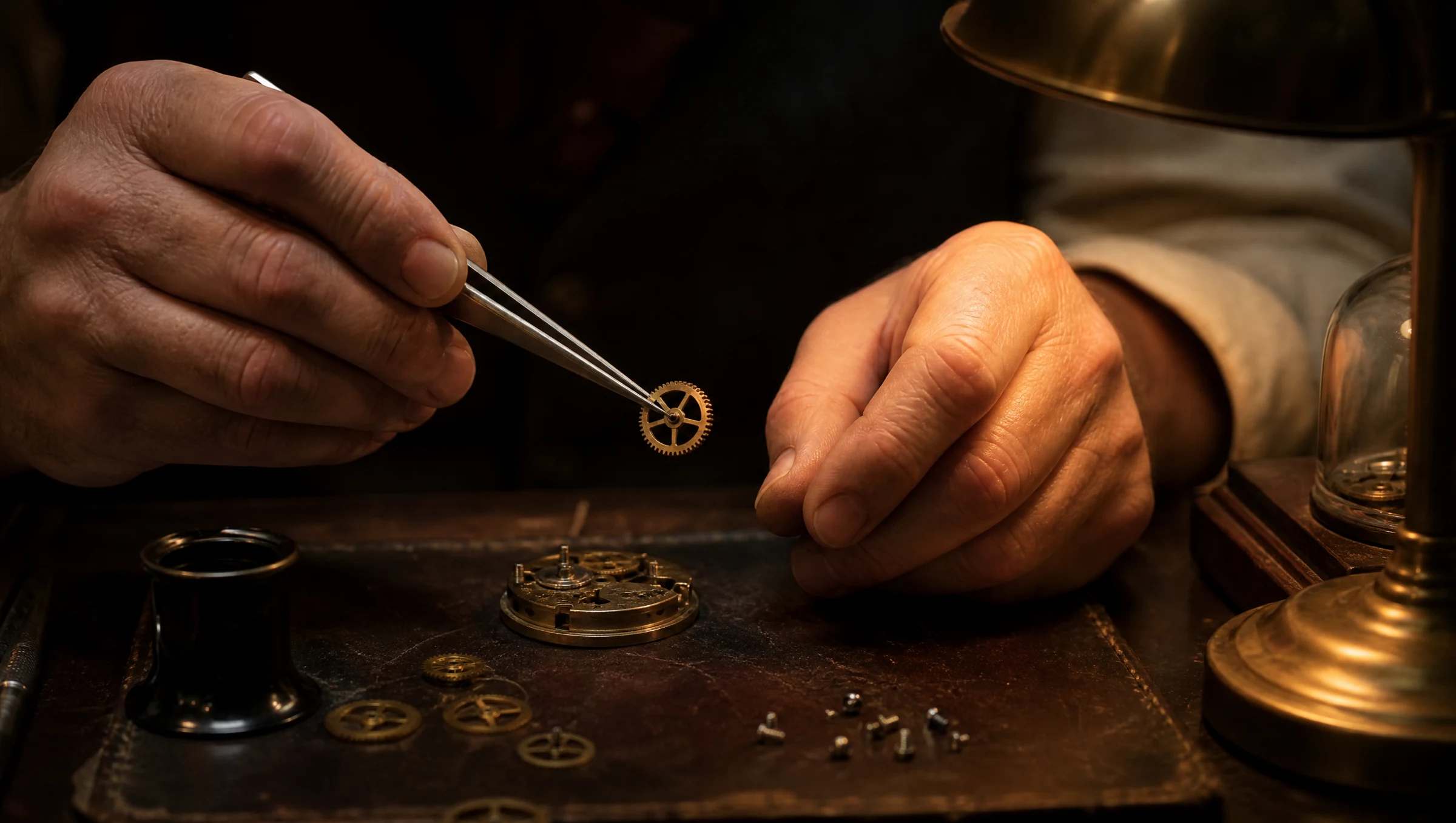
The atelier
A Bench, a Lamp, Two Pairs of Hands
One room above a joinery, one bench under the window, and the slow work of turning brass bar into something that keeps time.
Why We Do It This Way
Most clocks sold today are a quartz module in a nice box. When the module fails, the clock is finished. We wanted to make the other kind: a machine you can open, understand and keep running for a century.
So we cut our own wheels, turn our own pivots and fit every part by hand. It is slower, and it limits us to a handful of clocks a year. That limit is the point.
How a Clock Is Made
Month 1
Drawing
We draw the case and the dial around the room it will live in.
Months 2-4
Wheels and Plates
Brass is cut, wheels are toothed and the movement is assembled.
Months 5-6
The Case
The case is joined, finished and fitted with its glass.
Months 7-8
Regulating
The clock runs and is adjusted until it keeps time within seconds a week.
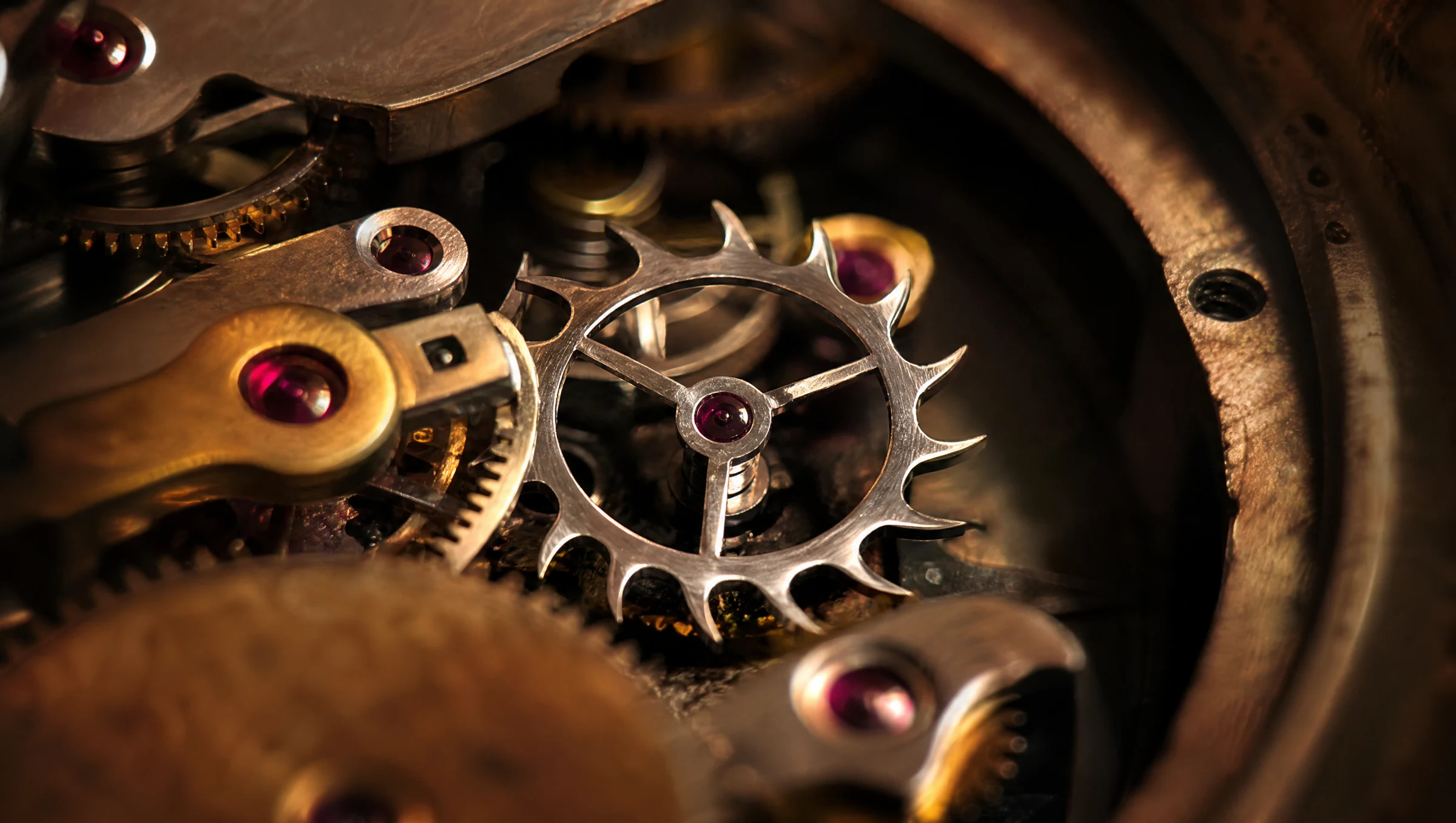
Parts You Can Remake
Every wheel is drawn and recorded, so any part we made can be made again, by us or by whoever looks after the clock next.